Linen literacy · Bedding guide
Bovi Vintage Linen Shams: Sizing, Lace, and Layering
A pillow sham can change the character of a bed without changing its most practical layers. In Bovi’s Vintage Linen collection, European stonewashed linen brings a softly irregular surface, while lace trim gives the edge a decorative, heirloom-like accent. The result sits between everyday bedding and ornament: useful, tactile, and expressive.
Choosing shams well is less about following a fixed styling formula than understanding proportion. Pillow dimensions, mattress width, the depth of the bed, and the visual weight of nearby sheets and blankets all affect how the finished arrangement feels. A little attention to those relationships can make lace look intentional rather than fussy—and linen look relaxed rather than untidy.
What distinguishes a sham from a pillowcase?
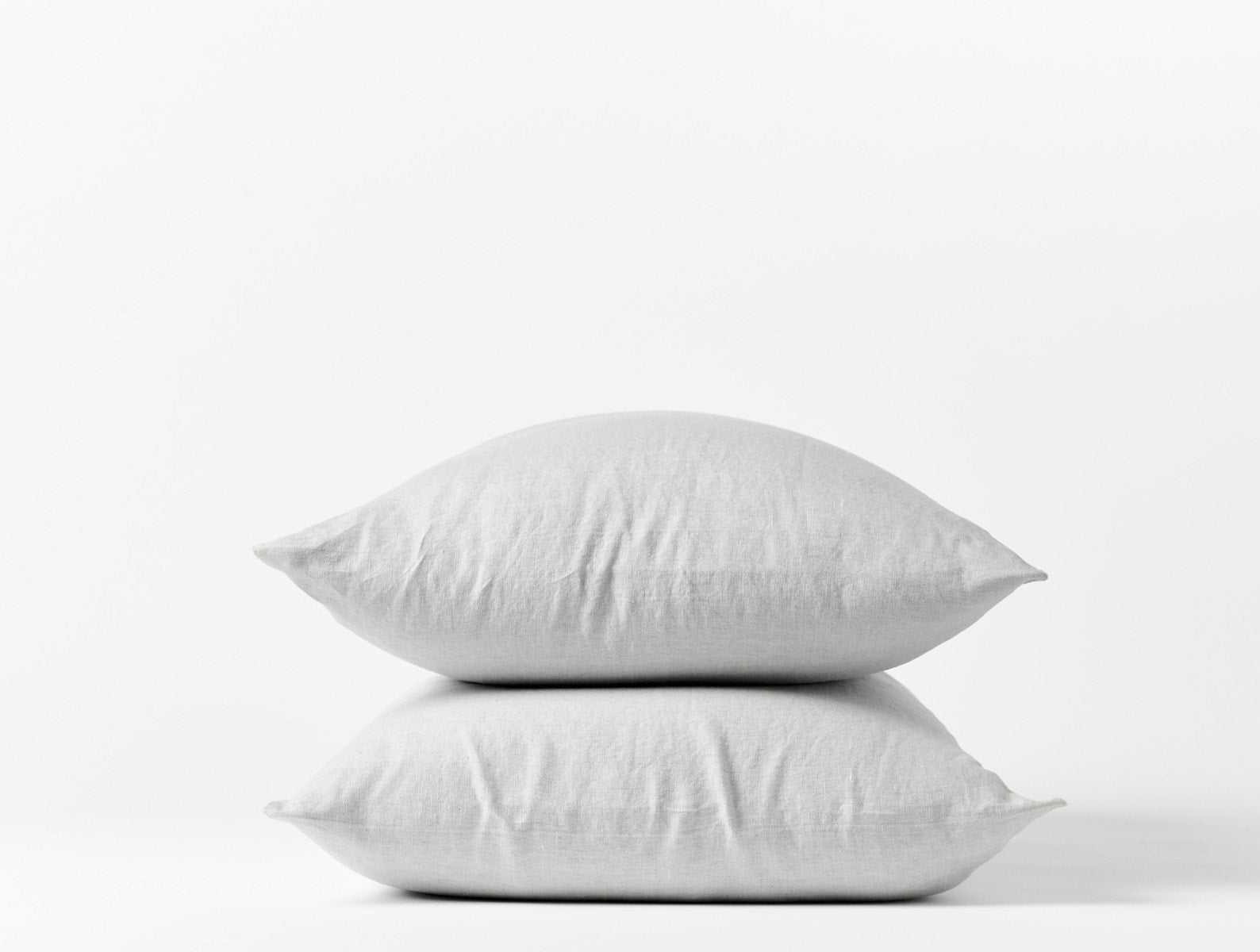
The words are sometimes used loosely, but pillowcases and shams usually have different jobs. A pillowcase is the washable cover that sits directly around a sleeping pillow. A sham is generally a more decorative cover, often made with a flange, trim, contrasting construction, or another finishing detail. It may protect a pillow, dress a bed, or do both, depending on its design and how it is used.
That distinction matters when deciding where a lace-trimmed sham belongs. Some people place decorative shams behind the pillows they sleep on, then remove them at night. Others use them as part of a layered arrangement that remains in place through the day. Either approach can work; the important thing is to know whether the sham’s dimensions and closure are practical for the pillow insert you plan to use.
Bovi Vintage Linen Pillow Shams are described as European stonewashed linen with delicate lace trim and four available sizes. The exact dimensions and closure details should be checked against the current listing before choosing. A product name alone is not a reliable substitute for measurements: labels such as “standard,” “king,” or “euro” can vary by maker and market.
Linen, stonewashing, and the character of the fabric
Linen begins as flax. After its stalks are processed, fibers are spun into yarn and woven into cloth. The resulting fabric is known for its visible texture and easy drape. Unlike a perfectly uniform surface, linen often carries small variations in yarn and weave that catch light unevenly. Those details are part of its material character, not necessarily signs of a flaw.
Stonewashing is a finishing process used to give fabric a softer, more relaxed hand and an already-worn-in appearance. It can reduce the crispness sometimes associated with new linen, making the cloth feel less formal from the start. The finish does not mean every linen item will feel identical: fiber quality, yarn, weave, weight, construction, and the particular finishing process all influence the result.
For the Vintage Linen shams, the contrast between the fabric and its trim is central. Linen brings a matte, softly rumpled field; lace brings a finer pattern and a more defined edge. Together, they can suggest a traditional bed without requiring every other element in the room to feel antique. Against plain bedding, the trim becomes a quiet focal point. Beside stripes or other decorative fabrics, it becomes one texture among several.
Linen is often valued for airflow and moisture management, but no fabric can guarantee a particular sleep experience for every person. Room temperature, bedding layers, personal preference, and the construction of the whole bed matter. A sham’s most certain contribution may be its tactile and visual one: texture around the pillow, and a considered finish at the edge.
How to choose the right sham size
Begin with the pillow insert, not the bed’s appearance. Measure the insert flat, from seam to seam, in both directions. Then compare those measurements with the sham’s stated finished dimensions. If the listing offers several sizes, confirm which pillow each one is designed to cover rather than assuming that a familiar size name will fit your existing pillows.
A cover that is too small may strain at the seams or distort the lace. A cover that is too large can look slack, with excess fabric collecting around the pillow. The ideal fit depends partly on how full the insert is and how the sham is constructed. Feather and down inserts compress and shift differently from firmer synthetic fills, so two pillows with the same nominal measurements may not sit the same way inside a cover.
Use this checklist before selecting a size:
- Measure the insert. Record width and height, and note whether the pillow is unusually deep or generously filled.
- Check the finished sham dimensions. Look for measurements in inches or centimeters, not just a size label.
- Confirm the opening and closure. An envelope back, zipper, or other closure affects how easily the insert goes in and how neatly the sham sits.
- Account for trim. Lace or a decorative edge can extend beyond the main body of the sham. Consider the full finished outline when planning the arrangement.
- Consider the pillow’s role. A sham used as a decorative back layer may be styled differently from one that needs to remain comfortable for regular use.
- Check the care label. A delicate trim may influence laundering and handling, even when the linen itself is robust.
For a particularly full insert, compare the product’s guidance with the measured pillow rather than sizing down automatically. A snug cover can give a tailored look, but excessive tension may pull at seams or lace. Conversely, a slightly relaxed fit can suit linen’s natural drape—provided the pillow does not disappear into a loose, empty-looking cover.
Understanding the four-size range
Bovi’s Vintage Linen Pillow Shams are described as coming in four sizes, including options intended for different pillow arrangements. Since exact measurements can depend on the specific version, confirm the dimensions before purchasing or repurposing an insert. The broad categories below are useful as planning ideas, not a replacement for the maker’s current size chart.
- Smaller decorative pillows can add a modest accent near the front of a bed, or provide color and texture on a chair or bench. Their scale is most successful when it relates to the furniture around them.
- Standard or queen-style pillows often work as the central sleeping-pillow layer on twin, full, or queen beds. Check the sham’s measurements carefully, as standard and queen inserts are not interchangeable in every arrangement.
- King-size pillows can create a broad horizontal line across a larger bed. Their width helps balance a king mattress, but the row may feel oversized on a narrower bed.
- Euro-style pillows are generally square and often used as a back layer. Their geometry creates height behind sleeping pillows, though the right insert dimensions should still be confirmed.
These descriptions are starting points, not rules. A pair of square pillows can make a more composed arrangement than a long row of mixed sizes, while a single accent sham may be enough in a spare room. The best configuration depends on the bed’s width, the number of people using it, and how many pillows will need to be moved at bedtime.
The lace question: detail, contrast, and proportion
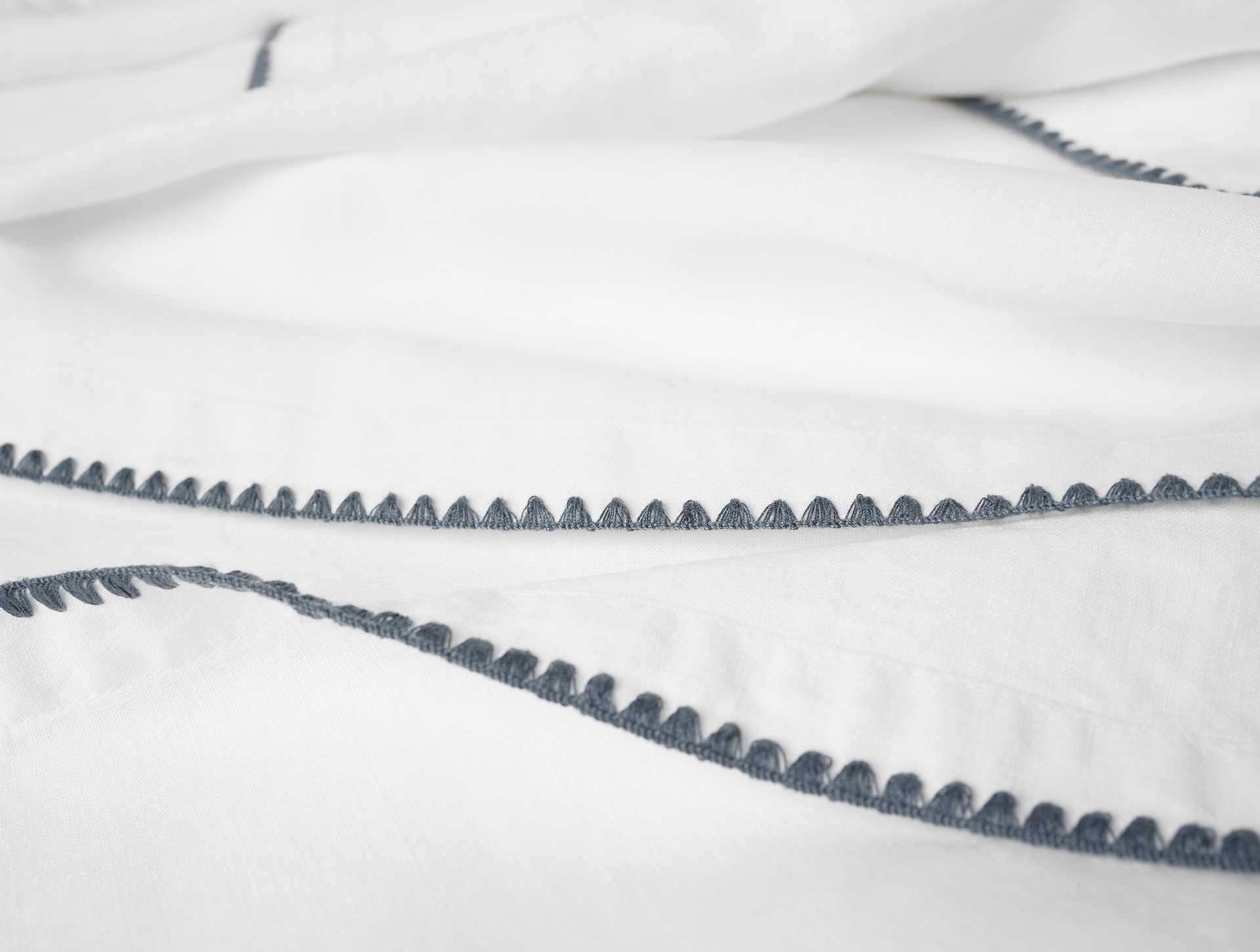
Lace changes the way a sham reads from across a room. Its open pattern creates a delicate boundary between the pillow and the bedding around it. On linen, the effect is especially tactile: the fabric’s visible weave and the trim’s finer structure sit close together, so the contrast can be appreciated both at a distance and up close.
To keep the trim in focus, give it room. A plain duvet cover, solid sheet, or uncomplicated blanket allows the lace edge to register clearly. If the bed already has a strong stripe, a bold floral, or several decorative finishes, the sham can still fit, but it helps to limit the number of competing details. Repeating one or two colors across the arrangement can connect different patterns without making every layer match.
Lace need not make a room feel formal. Pairing it with relaxed, stonewashed linen and simple bedding can soften its traditional associations. In a contemporary room, that contrast may be the point: a finely finished edge against clean lines, restrained colors, or a minimal headboard. In a more classic room, lace can echo other small details without turning the bed into a themed display.
Look closely at how the trim is attached and what the care instructions say. Decorative edges may need gentler handling than plain fabric. During everyday use, avoid catching the lace on jewelry, rough surfaces, or hardware. When arranging the pillows, smooth the trim with your hands rather than pulling at it to force the sham into position.
Layering shams with everyday pillows and bedding
A layered bed works when each pillow has a clear place. One practical approach is to begin with the pillows used for sleeping, cover them with their regular pillowcases, and place decorative shams behind or in front of them. This lets the sham frame the arrangement while keeping the sleeping layer easy to remove and launder.
On a smaller bed, a simple pair of sleeping pillows with one decorative layer may be enough. On a wider bed, a back row of larger pillows can establish height, with standard pillows in front and one small accent at the center. The arrangement should leave room for the duvet to remain visible; pillows need not occupy the entire head of the bed to look finished.
When mixing pillow sizes, think in terms of silhouette. Larger pillows at the back create a stable foundation. Medium pillows add a second plane, while smaller accents can introduce a focal detail. If every pillow is the same size and height, the arrangement can appear flat; if each one is different, it can become visually scattered. Repeating the sham’s color elsewhere—in a throw, sheet, or nearby textile—can help the lace feel integrated.
Everyday linen pillowcases can provide a quieter surface beside a decorative sham. For example, [Organic Relaxed Linen Pillowcases](/products/organic-relaxed-linen-pillowcases-5884) are described as GOTS-certified organic French linen, woven in Portugal, with pick-stitched cuffs. Their understated finish can sit alongside a more ornamented sham without asking the patterns to compete. Check sizes and construction for compatibility with the pillows you own.
There is also a practical test: can the arrangement be cleared quickly at night? A beautiful display that takes several minutes to dismantle may not suit every household. If convenience matters, reserve the most decorative pieces for the back row, or use fewer shams and let the linen texture do more of the work.
Color and texture without a rigid formula
Natural linen shades can vary from pale neutrals to deeper colors, while dyed versions add another layer of choice. Rather than relying on a strict matching scheme, compare undertones in the actual bedding. A warm white may sit differently beside a cool gray than a natural flax shade would. Lace can appear more prominent when it contrasts with the fabric beneath it, and subtler when its tone is close to the linen.
Texture can also do the work that color might otherwise perform. A stonewashed sham alongside smooth cotton sheets creates a change in surface without introducing another hue. A knitted or quilted throw adds a different scale of texture. The aim is not to collect as many materials as possible, but to create enough variation for the bed to feel layered and enough simplicity for each piece to be understood.
Consider the room in changing light. Linen’s irregular surface can cast small shadows, and lace’s openings can appear more or less distinct depending on the light and what lies behind them. A combination that looks quiet in the morning may seem more pronounced under a bedside lamp. That shifting quality is one reason to keep the surrounding palette measured.
Care that protects linen and trim
Follow the care instructions supplied with the sham, because finishes and trims can differ even among linen products. The available description identifies the Bovi Vintage Linen shams as stonewashed European linen with lace trim but does not provide a specific washing method. Do not assume that another linen item’s instructions apply exactly. When in doubt, check the current label or ask the retailer or maker for guidance.
General linen-care habits can help reduce avoidable wear:
- Wash only when needed, and separate colors according to the care label.
- Use a gentle cycle and mild detergent if permitted by the product instructions.
- Avoid overcrowding the machine so fabric and trim have room to move.
- Do not use chlorine bleach unless the care label explicitly allows it.
- Remove the sham promptly after washing and reshape it gently while damp.
- Use a low or moderate drying setting only if the instructions allow machine drying; avoid overdrying.
- Iron or steam only as directed, taking care not to flatten or snag decorative lace.
For a stain, treat the area as soon as practical, but avoid aggressive rubbing that can roughen the linen or distort the trim. Test a cleaning method in an inconspicuous place when appropriate, and follow the manufacturer’s guidance. Delicate embroidery, lace, or specialty finishes may require more cautious treatment than plain fabric.
Between washes, regular airing and careful storage can help keep decorative shams fresh. Store them clean and completely dry, away from direct sunlight and damp conditions. If folding creates a sharp crease through the lace, a looser fold or breathable storage bag may be preferable.
A considered choice, not just a finishing touch
A sham sits at the intersection of use and appearance. Its cover can protect a pillow from ordinary handling, but its value as a decorative layer depends on how well it fits, how it works with the bedding, and whether its care suits the household. With Bovi Vintage Linen, the appeal lies in the meeting of stonewashed European linen and lace: a relaxed textile surface edged with a more delicate detail.
Before choosing, verify the sham’s dimensions, compare them with the insert, and think about where the pillow will sit in the arrangement. Decide whether the lace should stand out or blend in, and whether the bed needs one accent or several layers. Those small decisions will do more for a balanced result than following a fixed pillow-count formula.
When proportion, texture, and care are considered together, a decorative sham can feel at home in many kinds of rooms. It can soften a spare arrangement, add detail to plain linen bedding, or bring a subtle vintage note to a modern space. The most successful layering does not hide the fabric’s character. It lets the linen remain linen—and gives the lace just enough room to tell its part of the story.
Quick checklist for choosing linen pillow shams
- Measure the pillow insert and confirm the sham’s finished dimensions.
- Check the closure and consider how easily the insert can be fitted.
- Look at how lace trim changes the sham’s overall size and visual weight.
- Choose a position in the pillow arrangement before deciding how many shams you need.
- Balance decorative trim with the patterns and textures already on the bed.
- Follow the product’s own care label, especially when lace or other delicate details are present.