Textile literacy · Bedding
Naturepedic Organic Flax Duvet Covers: What to Know About Breathability and Care
A duvet cover is both a protective layer and a piece of fabric in close contact with the sleeper. Its fiber, weave, weight, finish, and care routine all shape how it feels over time. Naturepedic’s organic flax linen duvet cover offers a useful example of how those details work together—and what to check before choosing a linen cover for everyday use.
A cover is more than a finishing layer
A duvet cover has a practical job: it encloses an insert, helping protect it from routine contact, dust, and spills while making bed care easier. But the fabric matters, too. It sits against sheets and sleepers, shifts as the bed is made, and is washed more often than the duvet insert it protects. Over months and years, the cover’s construction becomes part of the everyday experience of sleep.
That is why the words organic flax bedding tell only part of the story. Fiber origin and certification can help explain how a textile was sourced and processed, but comfort depends on a combination of fiber, yarn, weave, fabric weight, finishing, fit, and personal preference. Linen is not simply “cool” or “soft” by definition; its feel changes with these choices and with use.
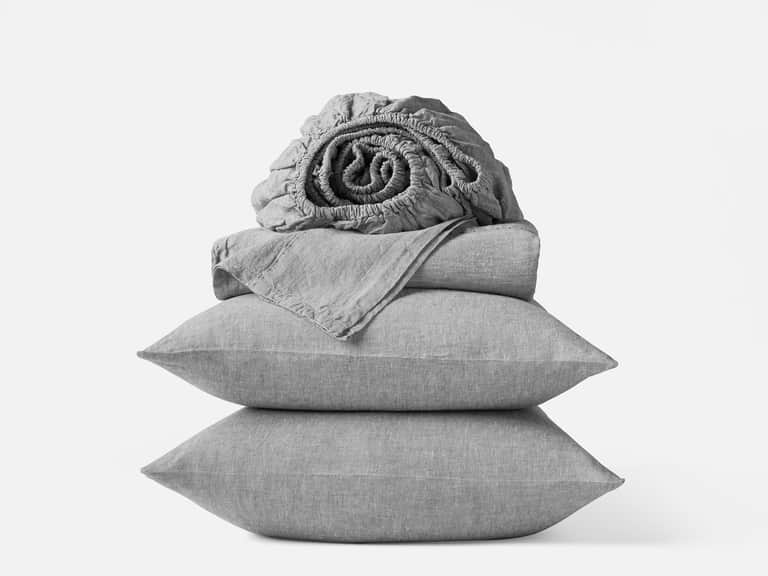
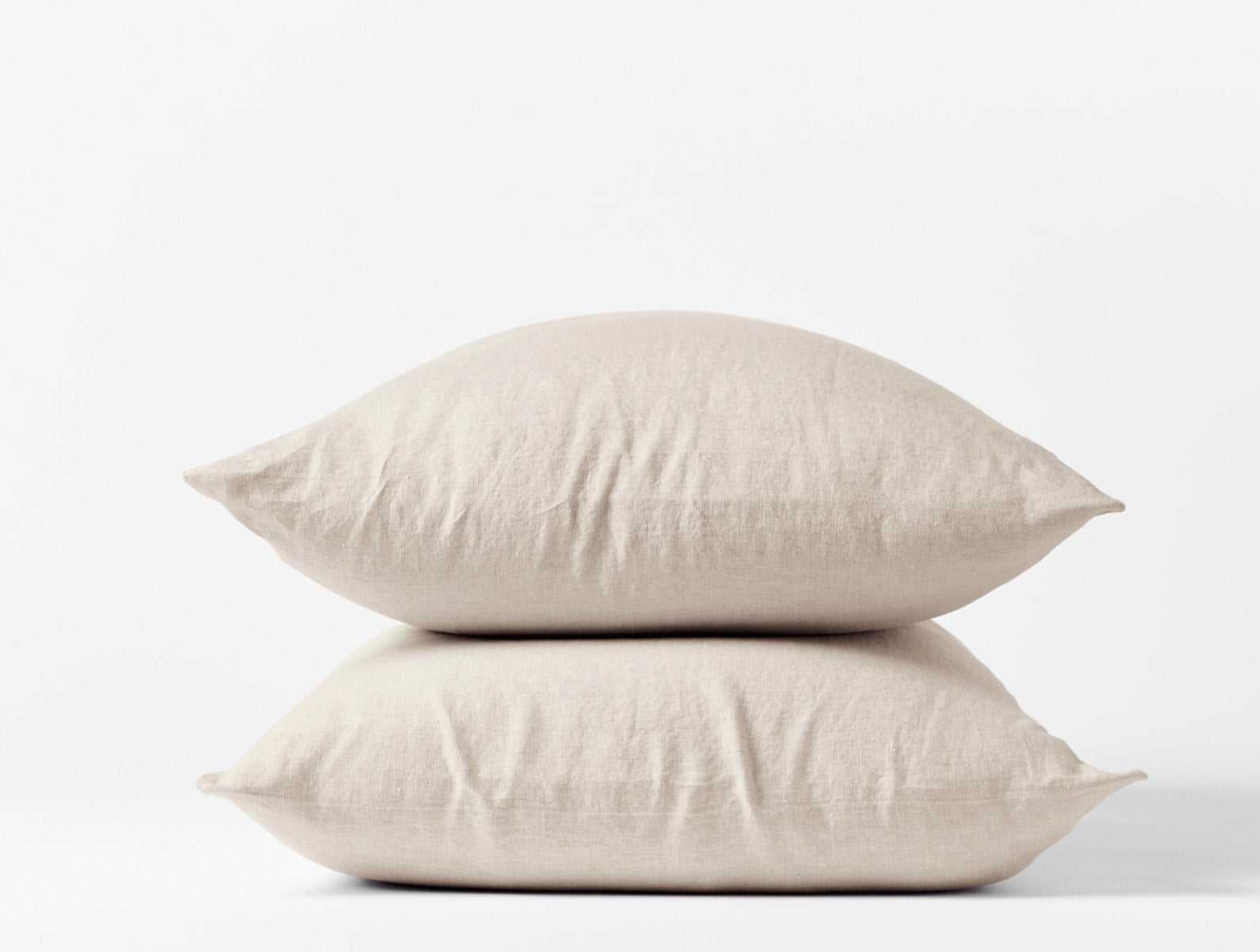
Naturepedic describes its organic linen duvet cover as made from certified organic flax grown in France, woven into linen, and stone-washed. The stated fabric weight is 185 grams per square metre, and the cover is offered in earth-toned colours. The set includes a duvet cover and two pillow shams, with corner ties intended to help secure the insert. These are useful points of comparison when evaluating natural duvet covers, though the care label and exact product details should always be checked before laundering.
Why flax linen feels different
Linen begins with flax, a plant whose stalk yields bast fibers. After processing, those fibers can be spun into yarn and woven into cloth. In a finished bed cover, their length, preparation, yarn structure, and the way the yarns cross in the weave all contribute to the textile’s character. Linen commonly has a more visibly irregular surface than smooth, fine cotton sateen. That variation is part of its texture, not necessarily a sign of poor construction.
Flax linen is often valued for allowing air to move through the cloth and for its ability to take up moisture. These properties can help a cover feel less clammy for some sleepers, especially when the room is warm. They do not make a duvet cover a temperature-control device, however. The duvet insert, room temperature, humidity, sleepwear, and the individual’s own heat sensitivity all influence comfort. A breathable cover cannot compensate for an insert that is too warm for the conditions.
It is also useful to distinguish breathability from lightweight construction. A cloth can feel substantial in the hand and still allow air movement; another can feel light but not suit a particular sleeper’s preferred texture. Naturepedic’s stated 185 gsm weight places the fabric specification in context, but weight alone does not predict softness, airflow, or durability. Yarn quality, weave density, finishing, and the condition of the textile after washing matter as well.
Thread count is not a simple quality score for linen. It is more commonly used as a shorthand in discussions of some cotton fabrics, and it does not capture the full structure of linen cloth. When comparing linen covers, look instead for clear fibre-content information, a stated fabric weight where available, construction details, origin claims, finishing, sizing, and specific washing directions. Those details give a more grounded picture than a single number.
How weave and finish influence comfort
Weave describes the arrangement of lengthwise and crosswise yarns. A plain weave, for example, uses a straightforward over-and-under pattern, while other structures can create different surface effects and drape. In practice, the words “loose weave” or “relaxed linen” are not complete technical specifications on their own. They can suggest a certain hand or appearance, but the finished fabric must be understood alongside its weight, yarns, and finish.
Stone-washing is a finishing process used to give fabric a softened, lived-in quality. It can reduce the initially crisp or firm feeling that some people associate with new linen, so a cover may feel more relaxed from the start. The finish does not mean that the fabric will never change. Repeated laundering and use can further alter its hand, and following the care directions helps limit unnecessary stress on the fibres and seams.
Naturepedic describes its duvet cover as stone-washed and says it becomes softer with washing. That expectation is best understood as a gradual change in feel, not a guarantee that every wash produces a dramatic transformation. Water temperature, detergent, machine action, drying method, load size, and the hardness of local water can all affect the result. Linen may also retain its natural creases; perfectly smooth fabric is not the only measure of clean or well-maintained bedding.
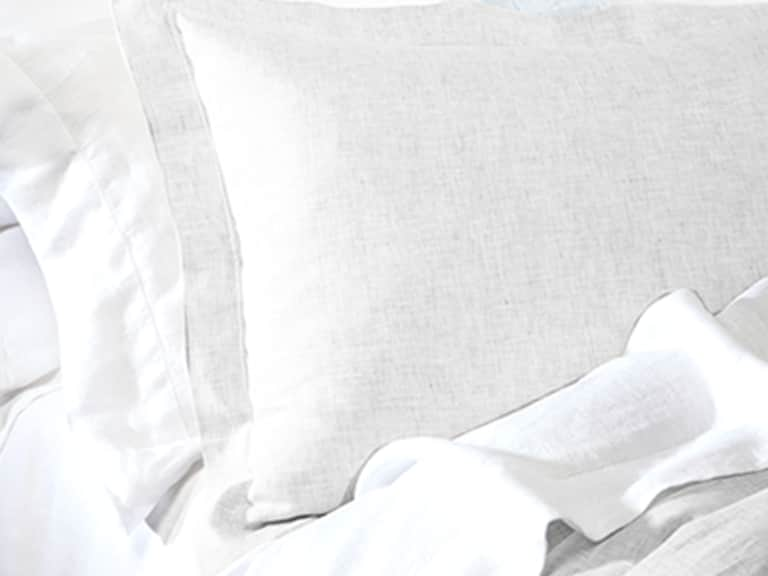
Finishing details can influence how a cover looks and how it works with the rest of the bed. A neutral palette may coordinate easily with a range of sheets, while visible slubs and creases bring a more tactile, informal character. These are aesthetic choices rather than performance guarantees. A relaxed appearance can be a useful feature for someone who prefers a bed that looks inviting without requiring a perfectly pressed finish.
Seasonal comfort: think in layers
Linen’s capacity for airflow and moisture management can make it appealing across a range of climates, but the duvet insert remains the main source of insulation. In warm weather, a lighter insert and a breathable cover may help the bed feel less enclosed. In colder conditions, a warmer insert and additional layers may be appropriate. The same cover can serve through the year if the layers beneath it change with the season.
Rather than relying on broad claims such as “all-season comfort,” consider the sleeping environment you actually have. Does the bedroom become humid at night? Is the mattress already warm? Do you tend to sleep hot, or do you prefer a heavier, cocooning bed? Are you sharing with someone whose temperature preference differs? These questions help distinguish fabric preference from insulation needs.
It is also worth remembering that breathability is not identical to cooling. A cover can feel cool to the touch at first and then warm as it reaches room and body temperature. Another may feel textured at first but become more comfortable after several washes. Where possible, evaluate fabric in relation to your usual sheets and duvet insert rather than treating it as a standalone solution to sleep temperature.
For readers comparing linen with cotton, the choice often comes down to touch and routine as much as climate. Linen typically has a more textured, relaxed surface and can soften with use. Cotton offers a wide range of weaves and finishes, from crisp percale to smoother sateen. Neither fibre is universally best. A good choice is one that feels comfortable, fits the insert and bed, and can be cared for in a way that suits the household.
The practical details: fit, ties, and closures
A duvet cover that fits the insert well is easier to use and more likely to stay evenly arranged. Compare the cover’s dimensions with the duvet insert’s dimensions rather than relying on the size name alone. Labels such as “full/queen” or “king/California king” can group more than one bed format together, and sizing conventions may vary among makers. Allow for the cover’s construction and the insert’s loft, too: a very full insert may feel snug inside a cover with little extra room.
Corner ties help attach the insert at its corners so it is less likely to bunch at one end. Before making the bed, locate the ties and the insert’s loops, if it has them. Tie the corresponding points securely but not so tightly that the cover or insert is strained. When a duvet shifts despite being tied, check that all corners are connected and that the insert is correctly oriented within the cover.
Fastening methods vary. Depending on the design, a cover may use buttons, a zipper, snaps, or another closure. A closure should be simple enough to use during routine changes and secure enough to keep the insert enclosed. Product information for the Naturepedic set identifies corner ties, but readers should consult the current listing or the item itself for the closure type and any updated construction details.
The accompanying shams can contribute to a coordinated bed, but their dimensions and closure styles should be checked separately if pillow fit matters. A sham is typically a decorative pillow covering, and the best fit depends on both the sham’s finished measurements and the insert’s loft. Product descriptions may list more than one pillow size, so confirm the configuration included with the specific set before purchase or use.
Duvet cover care: a steady routine works best
Care instructions are specific to the textile and its finish. Naturepedic’s listed directions for this cover are to machine wash warm, tumble dry low, warm iron if needed, and avoid bleach. Follow the label attached to the actual item if it differs from an online description. The label reflects the manufacturer’s care guidance for that product and should take priority over generic advice for linen.
Before washing, close the fastener if appropriate, untie the cover from the insert, and turn the fabric inside out if the care label recommends it. Wash the cover with similar colours and avoid packing the machine tightly. A crowded load can prevent large pieces of fabric from moving freely, increasing tangling and uneven rinsing. Using a suitable amount of detergent also helps: excess soap can be difficult to rinse away and may leave residue that affects the cloth’s feel.
Use the temperature specified on the care label, rather than assuming that natural fibres require a particular wash setting. Do not add bleach when the manufacturer says to avoid it. Bleach can weaken fibres or affect colour, depending on the product and textile. Fabric softener is not automatically necessary; when a finish or care label gives specific guidance, follow it rather than adding products by habit.
After washing, remove the cover promptly and shake it out to release folds. Tumble drying on low is the stated recommendation for this Naturepedic cover. Avoid leaving linen in a hot dryer longer than needed, since excess heat and overdrying can contribute to unnecessary wear and pronounced creasing. If ironing is desired, use a warm setting as directed and test an inconspicuous area when uncertain. Many people prefer the natural, gently rumpled look of linen and skip pressing altogether.
Stains are easier to address when noticed early. Blot fresh spills rather than rubbing them deeper into the cloth, and consult the care label before applying stain removers. Test any treatment on an inconspicuous area first, especially on coloured fabric. Avoid combining cleaning chemicals, and do not apply high heat to a stain before checking whether it has been removed, as heat may make some marks harder to treat.
Organic certification and sourcing claims
When a product is described as organic, look for the name of the certification and the scope of the claim. Naturepedic identifies its duvet cover as GOTS certified and describes the flax as grown in France, with the product made in a GOTS-certified facility in India. A stated fibre-growing origin and a stated manufacturing location refer to different stages of a textile’s journey. Reading both helps avoid treating “where the flax grew” and “where the cover was made” as interchangeable facts.
GOTS, the Global Organic Textile Standard, is a third-party standard covering organic textile processing and related environmental and social criteria across its defined scope. A certification can provide a framework for evaluating a claim, but it does not by itself tell you how a fabric will feel, how long it will last in your household, or how you should wash it. Comfort and care still depend on the product’s construction and instructions.
For a more informed comparison, check whether the certification applies to the finished product or a particular stage, whether the product page gives a certification reference, and whether the fibre content is clearly stated. Supply chains can cross several countries: flax may be cultivated in one place, spun or woven elsewhere, and sewn in another facility. Clear descriptions help readers understand those distinctions without assuming that one location describes the entire process.
A useful checklist before choosing a cover
For anyone comparing natural duvet covers, a short checklist can make product descriptions easier to interpret. It shifts attention from broad adjectives toward details that affect daily use:
- Fibre: Confirm whether the cover is 100% linen, a blend, or a different material.
- Weight and construction: Look for a stated weight, weave description, and finishing process where provided.
- Source and certification: Separate the stated origin of the flax from the locations of weaving and manufacturing; verify what a certification covers.
- Dimensions: Compare the cover measurements with the duvet insert, not just the bed size.
- Attachment: Check for corner ties or other fasteners and make sure they suit the insert.
- Care: Review wash temperature, drying instructions, ironing guidance, and restrictions such as avoiding bleach.
- Finish and feel: Consider whether you prefer crisp, smooth fabric or a more textured, relaxed surface.
- Set contents: Confirm whether pillow shams are included and which sizes are supplied.
This approach is especially helpful when comparing products with similar names. “Organic,” “stone-washed,” and “breathable” describe different aspects of a textile; none should substitute for the practical details of fit, fastening, and care. A clear product description makes those qualities easier to evaluate side by side.
A fabric with a life beyond first impressions
New linen can feel textured, substantial, or slightly crisp, depending on how it was made and finished. Its character often becomes more familiar through regular use and washing, but the pace of change is not identical for every fabric. Gentle, appropriate care supports that gradual softening while helping the cover retain its structure. Linen’s natural creases and visible texture are part of its appearance; they need not be treated as flaws.
Naturepedic’s organic flax duvet cover brings together several details readers can assess: stated organic sourcing, a 185 gsm fabric weight, a stone-washed finish, included shams, corner ties, and defined laundering instructions. Together, these specifications offer a more useful picture than a single promise of luxury or year-round comfort. They make it possible to think about how the cover may work in a particular home, with a particular insert and care routine.
The essential lesson is simple: breathability is a property of the whole sleeping system, not one marketing word on a label. Fibre and weave contribute, but so do the duvet insert, room conditions, fit, and the sleeper’s own preferences. With careful attention to those factors—and a routine that follows the care label—linen can be understood not as a mystery material, but as a durable textile whose comfort develops through informed use.